


Statistics show that the number of diseases of the musculoskeletal system and connective tissue has been increasing over the past few decades.Diseases of the spine and joints occupy an honorable third place after diseases of the circulatory and respiratory systems.
Joint pain and stiffness not only significantly reduce quality of life, but often lead to serious consequences - deformation and disability.It’s not surprising that patients often don’t know what arthritis and joint disease are.After all, it is more important for them to know how to get rid of the disease.
various symptoms
Arthropathy can be distinguished from arthritis by the symptoms it presents because these diseases manifest themselves in different ways.Arthritis is a group of inflammatory diseases of joints, and its pathological process involves all joint components - joint capsule, synovium, and cartilage tissue.
Characteristic symptoms of arthritis of any cause are:
- Redness, swelling, and severe pain when touched;
- Pain does not decrease with rest;
- The pain syndrome is throbbing, painful, or sharp in nature;
- The connectors are hot to the touch;
- Stiffness in the morning, which disappears in half an hour;
- General symptoms of poisoning - fever, malaise, weakness, sweating, etc.
With arthropathy, only the cartilage tissue is affected: due to the loss of fluid, the cartilage tissue becomes loose and thin.As a result, the bones of the joint rub against each other, exacerbating the pathological process.As the disease progresses, the cartilage tissue breaks down and its individual fragments, debris, are deposited on the epiphysis of the bone.
Unlike arthritis, arthropathy does not cause a long-term inflammatory response.Swelling and redness only occur in the final stages, when bone growth or fluid-filled joint spaces put pressure on surrounding structures.
A typical symptom of joint disease is the onset of pain, which occurs in the morning or after a long rest.Physical activity during the day, especially strenuous physical activity, is always accompanied by pain, which is relieved by rest.For example, arthritis in the knee joint can be felt when walking, running, or squatting.However, these movements can help relieve stiffness in the morning.
The difference between arthritis and arthrosis is also the duration of morning stiffness - it disappears within minutes as cartilage and bone tissue are destroyed.In arthritis, stiffness can last for more than an hour because large amounts of fluid (exudate) accumulate in the joint space overnight.However, this difference can be considered qualified because late forms of arthropathy are also characterized by long-term stiffness.
People with foot or toe joints have difficulty getting out of bed and taking their first steps in the morning.Lameness occurs as the gait gradually changes as the center of gravity shifts to the heels or toes.
The difference between arthritis and joint disease is not only the symptoms but also the cause.In addition, each disease has its own treatment characteristics.
various reasons
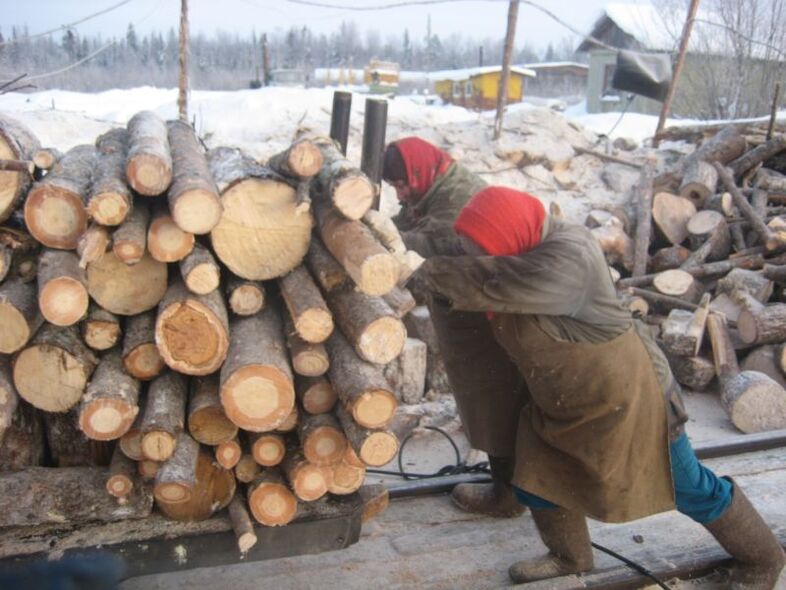
In more than half of cases, arthrosis develops after an injury and is not necessarily severe.The impact of the continuous microtrauma that accompanies the occupational activities of athletes, construction workers and other representatives of manual labor on the joints is much more severe.
Chronic injuries that often occur often go unnoticed, and various injuries "accumulate" in the joints.The cartilage gradually thins and breaks down, the joint capsule tears, and the bone tissue undergoes microfractures.This leads to bone deformation and creates favorable conditions for the occurrence of joint disease.
It’s also worth noting that car accidents are becoming more frequent, injuring people of all ages.Multiple severe fractures with bone fragmentation are often complicated by arthropathy, sometimes even by complete immobility of the joint.
Another cause of joint disease is thought to be a genetic predisposition - inherited characteristics of metabolism and bone structure.But even in this case, there is no guarantee that joint disease will be passed down from generation to generation.However, the risk of getting sick is still increased.
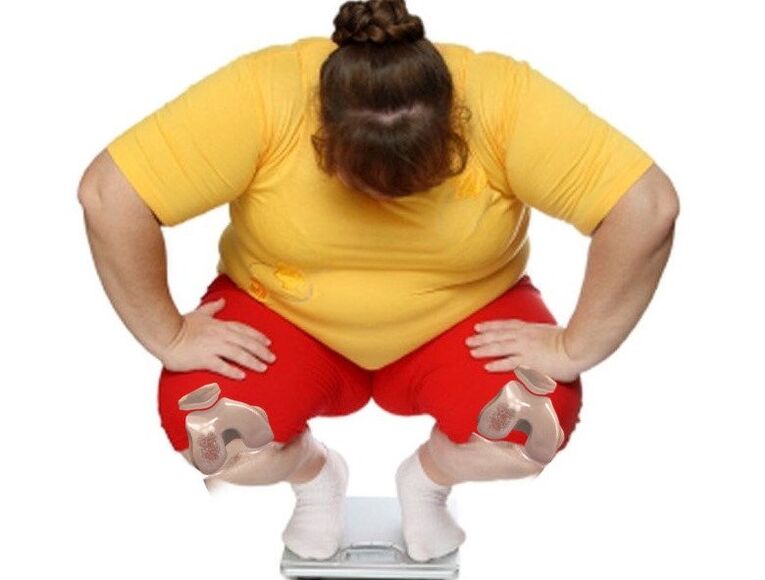
Because excess weight puts excessive stress on the entire musculoskeletal system, all joint elements are affected.In young people, cartilage tissue can withstand stress.And in old age, when the elasticity of cartilage decreases, excess weight will accelerate the wear and tear of cartilage.
Arthritis can also cause structural deterioration of cartilage because joint inflammation changes the composition of synovial fluid and cartilage tissue.Since arthritis almost always disrupts local blood circulation, there is a possibility of developing secondary arthritis.It doesn't matter whether the arthritis is cured or not.
Oddly enough, long-term psycho-emotional stress does not have the best impact on joint health.Due to the acute release of stress hormones (steroids), the permeability of blood vessels decreases and the blood supply to the joints deteriorates.This leads to a reduced synthesis of hyaluronic acid, which is part of the synovial fluid and determines its viscosity.Thanks to hyaluronic acid, bones can slide even if the joint structure is severely damaged.
It is worth noting that in most cases one cause alone is not enough for the development of arthrosis.Typically, the mechanisms of cartilage degradation are triggered by a combination of factors.
Arthritis and joint disease are fundamentally different in origin.Arthritis can be caused by:
- Infect;
- The immune system malfunctions when white blood cells begin attacking the body's own cells;
- Injured and stressed joints – for example, massage therapists often suffer from arthritis in their hands, weightlifters’ weak point is their knees, and boxers and tennis players suffer from shoulder joint injuries;
- congenital skeletal anomalies;
- Pathologies of the nervous and endocrine systems, as well as hormonal imbalances during menopause;
- allergic reactions;
- genetics;
- Metabolic disorders;
- Poisoning by toxic substances, bites from poisonous insects;
- Severe or prolonged hypothermia;
- alcoholism;
- Unbalanced diet and lack of vitamins and minerals.
Regardless of the cause of joint injury, the balance between destructive and restorative processes is disrupted.That is, too many damaged, dead cells are produced that don't have time to be used.New functional cells are not enough to replace dead cells.As a result, the joints malfunction.
What is the difference between arthritis and arthropathy if both diseases affect the same element - the joints?Why are the symptoms so different?The answers to these questions lie in which structures are affected by the pathological process.
With arthritis, the synovial membrane becomes inflamed and the quality of the joint fluid changes.There are damaged cells there too.The response to an overdose of them is swelling of the capsule itself and nearby tissues.
The difference with arthropathy is that damaged cells become concentrated in the cartilage, triggering another protective mechanism - the cells that have lost function are replaced by connective tissue, forming scars.Furthermore, the new scar tissue is not shock-absorbing or elastic.
Since joint dysfunction occurs for many reasons and may be related to hormonal, metabolic, and mechanical factors, understanding these causes is an important aspect.A lot depends on what they need to treat their arthritis or joints.
treatment differences
There are certain treatment options for arthritis and joint disease.The goal of arthritis treatment is to stop the inflammatory process; the goal of joint disease treatment is to restore cartilage tissue.This is another difference between the two diseases.The only similarity is that painkillers are used in both cases.
In this case, self-medication will not bring success and may make the situation worse.Even experienced experts do not always determine the difference between arthritis and knee arthrosis by external signs.An accurate diagnosis can only be made after the study results are received.
For the treatment of acute joint disease, nonsteroidal anti-inflammatory drugs can be used short-term.If the pain is severe, intra-articular blockade is performed with anesthetics and corticosteroids.Treatment can be supplemented with topical medications - ointments and gels.
The main method of treating arthropathy is to take chondroprotectants - drugs based on substances that promote the regeneration of cartilage tissue and inhibit the development of degenerative processes.The most effective method is to introduce hyaluronic acid into the joint space - with the help of multiple injections, it is possible to restore joint mobility and relieve the patient's pain.
If necessary, vasodilators may be used to improve circulation and muscle relaxants may be used to relieve muscle spasms.
Physical therapy is very important for joint disease.With practice you can achieve good results, namely:
- Relieves tension and increases tone in weak muscles;
- Reduce the intensity of pain;
- Increase joint space and improve joint mobility;
- Improves blood circulation and metabolic processes in affected tissues.
Treatment strategies for arthritis depend on its origin.For allergic, infectious, and gouty conditions, antihistamines, antibacterials, and drugs that eliminate excess uric acid are used.In most cases, symptomatic treatment is performed with nonsteroidal anti-inflammatory drugs and hormones.
Treatment for rheumatoid arthritis includes basic medications and biologic drugs containing bacteriophages.
For any type of arthritis, doctors will prescribe a vitamin complex containing B vitamins.
In severe cases, surgical intervention is required, which can be of the following types:
- synovectomy;
- Arthrotomy;
- Arthectomy;
- Cheilectomy;
- Arthrodesis;
- Arthroscopy.
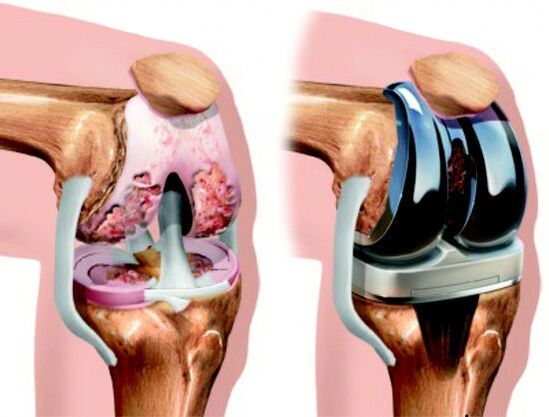
The presence of destructive changes in the joint may require endoprosthesis or reconstructive arthroplasty.Indications for this type of surgery are poor prognosis due to complete destruction of cartilage tissue.
in conclusion
Therefore, arthritis and arthropathy can be distinguished by the characteristic signs that accompany these diseases.It is important to know that arthrosis most commonly affects the hips and knees, and less frequently the ankle and interphalangeal joints.
In most cases, arthritis can be recognized by symmetrical damage to the joints: if a joint on the right wrist becomes inflamed, problems begin almost immediately with the corresponding joint on the left hand.
However, it should be remembered that it is impossible to diagnose it yourself, since similar symptoms can be observed in other diseases - tendonitis, synovitis, bursitis and many others.Therefore, once joint discomfort and pain occur, diagnosis is required to find out the cause.
The early stages of joint disease are treatable.In advanced cases, only surgery can restore joint function.In arthritis, prognosis depends not only on the type of disease but also on the quality of treatment provided.Prompt treatment of post-traumatic arthritis results in a full recovery in most patients.Eliminating the allergen in the allergic form of the disease also ensures recovery.
The main factors affecting a good prognosis are early detection and immediate treatment of the disease.In good health!